
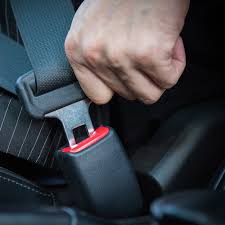
Think of a seat belt as your primary "survival cell" inside a vehicle. While modern cars are packed with fancy tech, the humble seat belt remains the single most effective safety feature ever invented. Here is why buckling up is non-negotiable: 1. The Physics of the "Second Collision" When a car hits something, it stops. However, anything not secured inside—including you—continues to move at the car's original speed until it hits something else (the dashboard, windshield, or steering wheel). This is called the human collision. A seat belt ensures you stop with the car, rather than after it. In technical terms, it manages the kinetic energy of your body:
K = \frac{1}{2}mv^2
By spreading that energy across the strongest parts of your body (hips and shoulders), it prevents your internal organs from absorbing the full force of the impact. 2. Preventing Ejection This is the most critical point. In a severe crash or rollover, being thrown from the vehicle is often a death sentence. You are 30 times more likely to be ejected if you aren't wearing a seat belt, and the survival rate for those ejected is incredibly low. The seat belt keeps you inside the "safety cage" designed by engineers. 3. Airbags Aren't Enough (They're Partners) Many people think airbags replace seat belts. In reality, they are designed to work together.
- An airbag deploys at roughly 200 mph.
- If you aren't buckled, you will fly forward into the airbag while it is still inflating with explosive force.
- Instead of a cushion, the airbag becomes a blunt instrument that can cause severe injury.
4. Maintaining Control If you have to swerve suddenly or hit a massive bump, the seat belt keeps you firmly in the driver’s seat. If you're tossed across the cabin, you lose your ability to steer or brake, potentially turning a "close call" into a multi-car pileup. Quick Stats at a Glance | Feature | Benefit | |---|---| | Lap Belt | Protects the pelvis and keeps you in the seat. | | Shoulder Belt | Keeps the upper body away from the wheel/dash. | | Pre-tensioners | Instantly tighten the belt during a crash to reduce slack. | > Pro Tip: Make sure the lap belt sits across your hips, not your stomach, and the shoulder belt is across your chest, never under your arm. > Would you like me to find some tips on how to properly secure children or pets in the car as well?







No comments yet. Start a constructive discussion.