
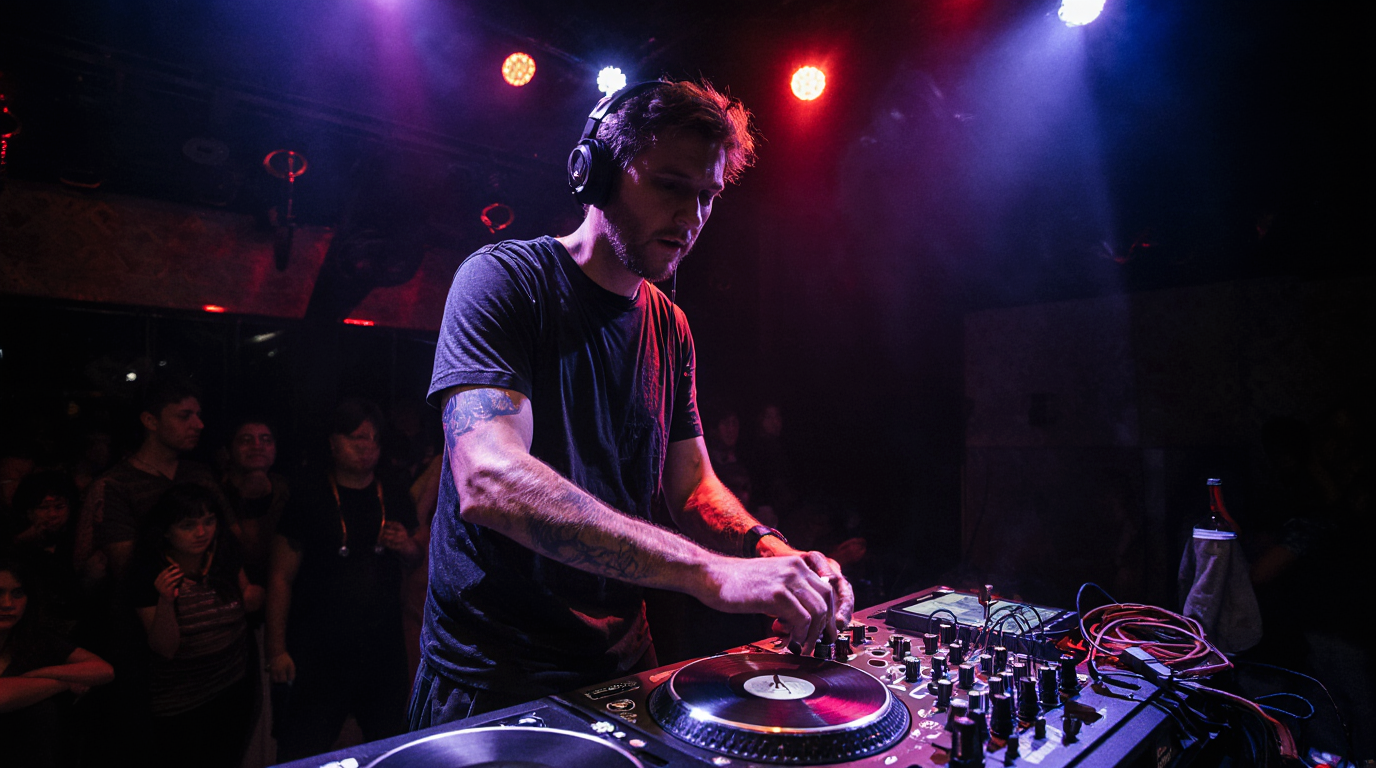
The Relentless Beat: A Journey Through the History of Techno Music
Close your eyes. Feel that rhythm? The relentless, driving force that pulls you in, compels your body to move, and resonates deep within your soul. That, my friends, is the essence of techno. More than just a genre, it's a cultural phenomenon, a sonic philosophy born from forgotten dreams and engineered for the future.
From its humble beginnings in the motor city to dominating dancefloors across the globe, techno's journey is one of innovation, rebellion, and a tireless pursuit of the perfect beat. So, let's plug in and journey through the fascinating history of techno music.
The Genesis: Detroit and The Belleville Three (Late 1970s - Mid-1980s)
To understand techno, we must first visit Detroit, Michigan. Not the gritty industrial landscape often portrayed, but a city brimming with creative energy and a unique blend of influences. Imagine a generation of young, predominantly Black artists, absorbing everything from the futuristic sounds of German electronic pioneers Kraftwerk and Yellow Magic Orchestra, the soulful funk of Parliament-Funkadelic, the experimental synth-pop of European bands, and the pulsating energy of disco and house music emerging from Chicago.
Out of this fertile ground emerged a trio of high school friends from Belleville, Michigan: Juan Atkins, Derrick May, and Kevin Saunderson. These three, often dubbed "The Belleville Three," were the architects of a whole new sound.
Juan Atkins, arguably the "Godfather of Techno," was fascinated by futurism and technology. Under aliases like Cybotron and Model 500, he experimented with drum machines and synthesizers, creating cold, mechanical, yet deeply soulful tracks like "No UFO's" and "Clear." His label, Metroplex, became a crucial incubator for early techno.
Derrick May (aka Rhythim Is Rhythim) brought a more melodic, almost orchestral sensibility to the raw electronic sound, famously declaring techno to be "like George Clinton and Kraftwerk stuck in an elevator." His seminal track "Strings of Life" remains a defining anthem. His Transmat label was another pillar of the Detroit sound.
Kevin Saunderson (aka Inner City, E-Dancer) focused on a more accessible, vocal-driven sound that often crossed over into mainstream success without sacrificing the underground ethos. His KMS Records helped bridge the gap between pure electronic experimentation and wider appeal.
What they created was a sound that was sleek, futuristic, and distinctly machine-driven, yet infused with the emotional depth and groove of their urban environment. It was music for the mind, body, and soul, designed for warehouse parties and late-night drives.
The European Connection: Spreading the Beat (Late 1980s - 1990s)
The Detroit sound didn't stay confined to America for long. Its raw, innovative energy quickly captivated audiences across the Atlantic, particularly in the UK and Germany.
In the UK, techno found a home within the burgeoning rave scene, providing the driving force for ecstatic all-night parties in fields and warehouses. Artists like 808 State and Autechre further pushed the boundaries of electronic music, taking cues from Detroit while forging their own distinct identities.
But the beat truly found a new spiritual home in Berlin after the fall of the Wall in 1989. The newly unified city was a canvas of abandoned buildings, empty bunkers, and a palpable sense of freedom and experimentation. Young people, eager to shed the ideological shackles of the past, embraced techno as the soundtrack to a new era.
Clubs like Tresor (which literally opened in a former safe in a department store vault) became legendary epicenters, inviting Detroit pioneers like Jeff Mills, Robert Hood, and Blake Baxter to play alongside emerging German talents. The sound evolved, often becoming darker, harder, and more industrial, reflecting the city's raw energy and history. Artists like Sven Väth and later Paul van Dyk (before his trance evolution) became household names.
Diversification and Global Domination (2000s - Present)
As the 21st century dawned, techno had firmly established itself as a global force. It continued to diversify, spawning countless subgenres and influencing nearly every corner of electronic music.
Minimal Techno emerged, stripping down the sound to its bare essentials, focusing on subtle shifts in rhythm and texture (Richie Hawtin, Ricardo Villalobos).
Acid Techno brought back the squelchy, hypnotic sounds of the Roland TB-303 synthesizer (Hardfloor, Luke Vibert).
Dub Techno introduced atmospheric, echo-laden textures and deep basslines (Basic Channel).
Intelligent Dance Music (IDM), while not strictly techno, often stemmed from its principles, creating more experimental, intricate, and often ambient electronic soundscapes (Aphex Twin, Boards of Canada).
The rise of the internet and digital music production democratized access, allowing producers from anywhere to contribute to the ever-expanding sonic tapestry. Major festivals like Awakenings, Movement Detroit (formerly DEMF), Time Warp, and Tomorrowland consistently featured techno headliners, bringing the underground sound to massive audiences.
Today, techno continues its relentless evolution. It exists simultaneously in intimate, sweat-drenched basements and on colossal festival stages. Artists like Charlotte de Witte, Amelie Lens, Boris Brejcha, and countless others are carrying the torch, pushing the boundaries of sound design, live performance, and emotional impact. They experiment with modular synthesizers, hybrid DJ sets, and immersive visual experiences, ensuring the genre remains fresh and vital.
The Enduring Beat
From the industrial heartland of Detroit to the liberated dancefloors of Berlin and beyond, techno has proven itself to be more than just a passing fad. It's a testament to human ingenuity, artistic freedom, and the universal power of rhythm. It's a conversation between human and machine, a bridge between past and future, and a constant invitation to lose yourself in the beat.
So, the next time you hear that unmistakable kick drum, remember its incredible journey. Remember the pioneers, the rebels, and the innovators who dared to dream a new sound into existence. Because in techno, the future isn't just a concept – it's the rhythm you're dancing to right now.
What's your favourite techno track or a memory from a techno party that stayed with you? Share it in the comments below!
Anthony Cairns Artist & Producer Electronic Dance Music: Links are below. beatstorapon




No comments yet. Start a constructive discussion.